

Planning A Family Holiday While Working Remotely On The Side? Think Again

Planning A Family Holiday While Working Remotely On The Side? Think Again

 

Tanya TosenTanya Tosen
Master Mobility and
Tax Specialist

Consequently, the number of conversions to remote working platforms have resulted in professionals conducting their business while travelling. However, things become complicated when the lines are blurred between working remotely and holidaying with the family.

For those who are planning a holiday with the intention of working remotely at the same time, there are two alarming factors at play. These two factors need to be dealt with carefully to avoid legal recourse by either the country they visit, or their home country.

What type of visa to apply for?

Tourism visas are issued exclusively for tourism purposes. If you are planning to do work on your holiday, then you are no longer there exclusively as a tourist. While many remote employees take advantage of this grey area created by the pandemic, the hard truth is that you could be breaking immigration laws.

If found to be in contravention of these laws, you could be arrested in the foreign country and your visa suspended. Not only will authorities ask you to leave the country immediately, but you might be barred from entering the country again.

Before setting off on your holiday, check to see if the country you intend to visit offers a remote work visa, which are often referred to as a digital nomad visa. These visas are unique to each country and can be impacted by the individual applying for them.

While your family can travel on a tourism visa, you might have to stay on a remote working visa for the duration of your trip. If that is required to adhere to the host country’s immigration laws, then it is better to overcome this hurdle prior to entering the country.

What country to pay tax in?

One of the more pertinent questions to ask, is which country has the right to tax you on the income earned while working remotely? Few travellers are aware that there might be serious tax implications involved.

Should you be rendering your services abroad, you may be faced with the situation that you could be liable for personal income tax in the country you are working in. Unfortunately, this does not change if you are on holiday with your family and plan to do a bit of work on the side, whilst visiting another country.

If the country you are visiting has a Double Tax Agreement (DTA) in place with South Africa, then you may qualify to apply for tax relief under the DTA thereby not necessarily becoming immediately liable for personal income tax in the country you are visiting. However, should the country you are visiting have no DTA in place, you may be liable for personal income tax from day one.  In essence, one should be aware that this situation can quickly become complex. It is not always a clear-cut, straightforward case. It all depends on the merits and facts of each individual’s unique circumstances.

Get the right advice before you start planning your trip

It is important to note that you could be asked to provide proof of employment and proof of income. These requirements change depending on the country you intend to visit. Tax or immigration laws are country-specific and need to be carefully assessed by a professional immigration consultant or an experienced tax specialist, who has specialist knowledge in assisting individuals working remotely while abroad.
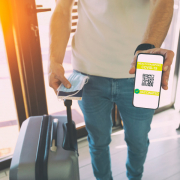

Vaccination–Your new travel pass

Vaccination – Your New Travel Pass

Travelling was no longer about creating life-changing memories. Whether lovers on a honeymoon, visiting your grandchildren, or off on a wild safari adventure, every dream was placed on hold for the last 18 months. Even business travellers had to find alternate ways of conducting business. They had to forego that first international trip to meet potential clients, which meant losing out on that personal touch. Face to face negotiations and customer engagement became virtual encounters. Now that the dust is starting to settle, it is time to look at the realities of travelling in a post-Covid world. Your vaccination status could be a deciding factor in whether you can travel or not. Many countries are starting to open their borders to visitors, but most of them only accept those who have been vaccinated with the correct vaccine. The list of commonly approved vaccines accepted by countries around the world include:
  • Comirnaty (BioNTech, Pfizer)
  • Moderna
  • Vaxzevria (previously COVID-19 Vaccine AstraZeneca, Oxford)
  • Janssen (Johnson & Johnson)
Some countries allow unvaccinated travellers to enter, but you will be required to undergo a 10 to 14 day quarantine in designated hotels, or a 10 to 14 day self-isolation. This means you would need to take extra leave days from work to accommodate for the 10 to 14 days quarantine, while a business trip would be significantly longer and require careful planning, not to mention having a financial buffer ready to fund those days. It is also imperative to get as much information as possible about the country you wish to visit. Access to public areas, like tourist attractions or restaurants, are often restricted for unvaccinated travellers, which means you will be unable to explore the destination or take in the beautiful sights, not to mention how it can hamper your business dealings in a foreign country. All that said, the world of travel is still alive and ready for you. It is time to spread your wings and create amazing memories. Whether for business, visiting family or even new beginnings, contact us today so we can make your travel a reality.

Please also see link below for information on countries open to South Africa.

Work Permits For South Africa And Further Abroad

Work Permits For South Africa And Further Abroad

What is a work permit?

Visas are documents that enable individuals to enter a country without necessarily having secured a contract of employment with a company. These individuals usually pay for the Visa applications themselves and are tasked with proving their ability to take care of themselves.

Work permits are exclusively based on the employment process of the individual. The approval or issuing of a work permit solely depends on the outcome of an individual’s job application. It is also not uncommon for the employer to pay or reimburse funds towards the work permit application.

Contrary to popular belief, a work permit does not entitle individuals to enter a country and start looking for work once they set foot on foreign soil. The most important concept to grasp is this: A work permit is for one specific job with one specific employer in one specific country, which is only valid for a specific period.

If anything sours the relationship between you and your employers, or your employment contract is terminated for whatever reason, then you would have to find another position and apply for a new work permit, or you will be forced to leave the host country. Failing which, you could land yourself in hot water with local authorities and face deportation and be barred from re-entering that country.

Work permits into South Africa

Immigration laws put forth by the Department of Home Affairs (DHA) govern the process of entering South African borders, especially when it is for the purposes of earning an income. Foreign workers must therefore apply and be granted the appropriate visa or work permit before starting in their work.

Work permits into Africa

While South Africa forms part of the African Union and have a vested interest in a multitude of trades and commerce across Africa, it’s dangerous to assume that it prequalifies you as a job applicant. If an African company does not have a particular skillset available to them in the local talent pool, it means your skills and qualifications will be matched against applicants from around the globe.

Work permits further abroad

If you feel the world is your oyster, you might find yourself casting applications overseas. While securing a work permit overseas sounds unattainable or even complicated, it all comes down to your ability to do a job better than anyone else in the country you are applying to.

Once you have concluded interviews and secured a binding sponsorship from an employer, the rest of the work permit application process will only change according to that country’s immigration laws.

The barrier of skills and qualifications

Skills is the buzz word blocking every jobseeker’s path to the future they hope for. Without the relevant skillsets or qualifications, it is practically impossible to find an employer to sponsor and subsequently assist you with a work permit application. With the necessary experience or degrees, it is possible to find placement with a reputable firm who can simplify or ensure compliance to the host country’s immigration laws.

Obtaining a sponsorship alone from a licensed employer, does not automatically qualify you to work for that company, or to be in that country. Some professional expatriates often reason that immigration regulations do not apply to them, but quickly discover that working without a legal permit can result in immediate deportation.

Top Tips To Consider When Applying For A Work Permit

Top Tips To Consider When Applying For A Work Permit

Eager to find international career advancement, or simply to earn a foreign salary, they put their skills and qualifications on the line and begin applying for work overseas. Once successful, they are faced with the conundrum of a work permit.

In applying for a work permit, you could encounter unforeseen challenges. Here are some work permit tips to help you on your journey.

Understanding the relevant work permit

It is vital to have full understanding of the permit you are applying for. Changes to work permits could create a possible snare for you in the host country. It could also complicate the relationship with your foreign employer and put you right back where you started, with less money in your pocket.

If your employer does not assist in the work permit application, then carefully research the different work permits available to you before submitting your documentation. Be sure to weigh up the requirements and the benefits of each permit.

For instance, if you work for a business expanding a global footprint and apply for an intracompany transfer to assist with their expansion plans, then you could qualify for a special project visa, which is valid for shorter periods and usually easier to apply for.

Travel arrangements

Do not make travel arrangements until the work permit has been issued. There are too many tales of stranded expatriates, or their families, who were denied entry into a country because of a minor detail, like a missing document or incorrect information on a work permit. This can become very expensive and put your employment contract at risk.

Consult an accredited visa or permit services provider, as well as a professional travel agency, when finalising your work permit application. The two components of work and travel should complement each other and be managed accordingly, not leave you bidding your family farewell at the airport gates.

The work permit application process

Most countries require that foreign job applications and work permit applications be submitted at the embassy or consulate of the applicant’s home country. While this is not always the case, it is important to understand what is required from you during the application process. Your age, immigration status, skills and qualifications, even the country you reside in, could contribute to the decision-making process when applying for a work permit.

Questions to ask when applying for a work permit:

  • Does the work permit make allowance for my spouse to accompany me?
  • How long is the work permit valid for?
  • Are my skills/qualifications listed as critical skills in the host country?
  • What other limitations/restrictions are included in the work permit?
  • Will my new employers reimburse the costs of applying for the work permit?
  • What documentation will be required for the application?

Because immigration laws vary from country to country, requirements for work permits also vary depending on the country you are applying to work in. Unless you have ample experience with work and visa applications, it is always better to rope in the help of an established immigration specialist who can answer the more pertinent questions.

With a team of experts on hand, we provide a turnkey solution to professional expatriates applying for work permits or visas in foreign countries. It is our mission to eliminate concerns before they arise.

The Release of The 2021 CS List

The Release Of The 2021 Critical Skills List Is Expected To Be Released Within The Last Quarter of 2021

Marisa Jacobs

Marisa Jacobs

Director

During a 17 August webinar, hosted by the Forum for Expatriate Management and chaired by the Director of Xpatweb, Marisa Jacobs, the Department of Home Affairs (DHA) confirmed that the final list will be tabled on forum for the National Economic Development and Labour Council (NEDLAC) within the last quarter of 2021.

If unhindered by further delays, the list will be Gazetted by the Minister of the DHA, Dr Aaron Motsoaledi. Until such time that the new list is Gazette, the 2014 list remains the list that will be used for all critical skills submission and adjudication procedures.

Why is the Critical Skills List so important?

The CSL is a list of occupations that are considered critical while there is a limited number of similarly skilled and qualified local candidates to choose from.

Every employer in South Africa who employs critically skilled individuals and who is tasked with attracting and retaining these skills, is impacted significantly by the CSL and the immigration legislation changes that follow its release. The list enables them to source the listed skillsets from abroad and bring in specialists to fill those positions.

The Department of Higher Education and Training (DHET) plans to provide updated CSL reports to DHA on a bi-annual basis subject to availability of research funding. Consequently, this will simplify the work visa application process for those individuals with critical skills that are in high demand.

Further to this, the DHET can utilise the CSL when allocating funds towards higher educational needs. Meaning, if the CSL indicates that there is a paucity of engineers across a specific engineering sector, DHET can provide scholarships, bursaries or other forms of incentives to individuals within that industry to accommodate for an ongoing demand.

How was the Critical Skills List compiled?

DHET used detailed methodologies, exercises and activities to assess the current employment trends when preparing a draft list of skills shortages. They received input and commentary from the public, governmental stakeholders, lobby groups, professional bodies, higher learning institutes, black management forums, unemployed South African graduates, and other private business formations. It is important to note, that the DHET was supportive of input from selected sources with relevant contributions to the creation of the CSL.

By partnering with large multi-national companies across South Africa, Xpatweb conducted ground-breaking annual critical skills surveys. Their research was key to ascertain the shortage of critical skills that were still very much in demand, which were subsequently re-included in the draft Critical Skills List. This marked the only private sector company that formed part of the formal consultation process with the research now forming part of legislation.

The feedback and research were consolidated, considered and then measured against data on all listed occupations, before making a draft CSL later published by the DHA.

The lasting effect of lockdowns and looting

In compiling the CSL, the methodologies used were overtaken by unforeseen events. Not only has the COVID-induced lockdown played a part in delaying the release of the CSL, but it has created a knock-on effect on all types of commerce, which resulted in business closures and job losses.

Companies were forced to let go of employees with skills that were considered to be in short supply. Suddenly there was a pool of available SA citizens with skills that were listed in the CSL, which means the occupation in question, may no longer be required to be mentioned in the list.

Using a report from National Treasury, the DHET has been working to determine which industries would be affected by the lockdown over a longer period. Researchers had to separate the data that would be affected by lockdown and measure it against the trend of economic conditions, then deduce what the result would be on those occupations.

However, the public unrest and violent lootings that rocked South Africa during July 2021, was the nail in the coffin for many businesses. This adversely affected the supply and demand of jobs, which according to Stats SA figures, has had an immediate effect on unemployment. Economists and employment specialists speculate that the unrest alone had placed nearly 50 000 jobs at risk.

In light of these events, the research towards compiling the CSL had to be adjusted once more. A final draft CSL has been handed over to the DHA for consideration, where they consulted with various government departments, such as the Departments of Health, Tourism, Public Enterprises and NEDLAC for additional input.