

Mozambique Improves Immigration Processes Oil & Gas Sector to benefit

NEWS | MOZAMBIQUE IMPROVES IMMIGRATION PROCESSES OIL & GAS SECTOR TO BENEFIT

The expected influx of expatriates and investments into the exploration of LNG has forced government departments to implement various measures to monitor as well as facilitate entry into Mozambique.  The Rovuma Basin Decree 2/2014, although approved about six years ago, its various measures and concessions for immigration-related matters were not implemented until recently. This has been timeous in the booming projects in the oil and gas sector in Pemba, Coral Sul, and others.

From an immigration perspective, this decree relaxes requirements, improves processing times, and removes layered processes.

Sub-contractors and companies in the Mozambique LNG Project are expected to benefit greatly from its measures. These companies and their approved sub-contractors, together with a plan of development approved by the Government of Mozambique, will receive access to an online portal for submissions and processing of applications. The Ministry of Labour introduced this online portal to process applications related to the Rovuma Basin and for adjudication of any expatriate skillset that is required as part of the approved projects for the region.

Overall Improvements to Mozambique’s Visa System

Since access to the online portal is exclusive to companies and sub-contractors related to the approved projects in the Rovuma Basin, all other companies must continue to follow standard processing and requirements. Quicker processing times were included in the implementation of these measures.

Short-term work permits can be expected to be processed in about 3 – 5 working days as opposed to the standard processing time of 3 – 4 weeks for companies in the non-oil gas sector. Additionally, companies, as part of their approved plan of development, receive a number of quotas allocated to them facilitating the long-term work permit process.

Long-term work permits applied through available quota positions are also processed through the online portal in shorter timeframes of approximately 5 – 7 working days. Standard processing for such applications has generally been 3 – 4 weeks.

Allowing for online processing of the applications streamlines the application for a long-term work permit avoiding additional bureaucratic tasks as part of the application process.  Certain requirements such as Certificate of Equivalences issued by the Ministry of Education, similar to the South African SAQA evaluation, have been removed, which usually results in an additional 4 weeks to the end-to-end processing of long-term work permit processes.

Gateway to Residency in Mozambique

Candidates with approved work permits under the online system may qualify to obtain a residence permit upon arrival instead of previously obtaining a work visa at a Mozambican High Commission abroad and an additional residence permit at the immigration department in the province they are expecting to work. Although this may be beneficial to all expatriates arriving into Mozambique for the LNG project, it is a process exclusive to companies with an approved plan of development with the Government of Mozambique.

Overall, the changes have been timeous to the upcoming Mozambique LNG projects.
AUTHOR

Tarissa Wareley - Immigration Specialist

Tarissa Wareley
Immigration Specialist
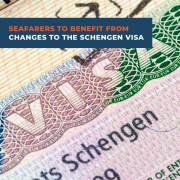
Seafarers to benefit from changes to the schengen visa-XP website

NEWS | SEAFARERS TO BENEFIT FROM CHANGES TO THE SCHENGEN VISA

Frequent travellers, including seafarers, who travelled to EU Member states and returned to their home countries without any infringements of visa conditions and/or overstays may qualify for multiple-entry visas with a validity of 5 years.

Such applications, however, must be submitted with enough proof that the applicant will return to their home country and the intention to leave the EU after the prescribed 5-year period. In addition, seafarers may apply for a Schengen visa nine months prior to the intended travel date, while other travellers can apply six months prior. This should prove to be a great benefit to seafarers that are awaiting final schedule of their first port of call.

The effected changes also include a requirement by EU member states whereby each state must have a representative of their respective country in each country abroad to ensure travellers are not required to visit a neighbouring country for the sole purpose of applying for a Schengen visa.

The numerous benefits of the changes to the Schengen visa, however, comes at a cost. The visa fee for the Schengen visa is expected to increase from €60 (R962) to €80 (R1,282) per application. Children, over the age of 6, will now have to pay €40 (R640) instead of the previous lower fee of €35 (R560) per application.

The new Schengen Visa Code will also allow for a mechanism to review the visa fees every three years and determine should these remain the same or increase. The same may compel non-Schengen countries in cooperating with the EU for the readmission of their illegal migrants. Nevertheless, the Schengen area may see a substantial increase of travellers and seafarers as a result of these positive visa changes.

AUTHOR
Tarissa Wareley - Immigration Specialist

Tarissa Wareley
Immigration Specialist

SOUTH-AFRICA’S-NEW-EXPAT-TAX-‘A-SCARE-TACTIC’-EXPERT-xp

NEWS | SOUTH AFRICA’S NEW EXPAT TAX ‘A SCARE TACTIC – EXPERT’

Speaking in an interview with 702, Botha said that South African tax residents who render services outside the country on behalf of an employer for longer than 183 full days in any 12-month period can be granted an exemption on their income tax.

However, under the new rules set to be introduced in March, these South African will only receive a break on the first R1 million earned abroad. After this you can be taxed according to South Africa’s own income tax system, he said.

Botha said that the majority of clients his firm deals with sit within this R1 million-plus bracket, especially as the calculation considers additional benefits such as housing allowances and education.

“Treasury cross-referenced South African experts and immigration stats and compared them to compliance with tax returns.

“What they noticed was that there was a vast difference between these immigration stats and people being compliant, so it was almost a bit of a scare tactic to wake up South Africans to correct their returns and get compliant.

“Obviously they are also under-budget, and experts earn a lot, so they perhaps want a piece of that pie as well.” Understandably, some expats are aggrieved by this change.

Concerns have been raised that limiting this exemption may increase permanent emigrations from South Africa and have a negative impact on remittances to country, particularly for those with lower incomes working abroad.

National Treasury is, however, firm in its view that the R1 million threshold is already a compromise, and that from a policy perspective the abuse of the exemption by some expats unfairly benefitting from “double non-taxation” (i.e. not paying tax in either South Africa or the foreign country in which they work) must be stopped.

Source: BusinessTech
AUTHOR
Nicolas XP

Nicolas Botha
Senior Financial Emigration Specialist

Angola is open for business with more relaxed visa requirements

NEWS | ANGOLA IS OPEN FOR BUSINESS WITH MORE RELAXED VISA REQUIREMENTS

WITH MORE RELAXED VISA REQUIREMENTS

The Angolan government has been introducing several initiatives to encourage investment and business opportunities in the oil rich country since former president José Eduardo dos Santos stepped down.

(more…)
The silver lining in SA's ICT Skills Brain Drain

NEWS | THE SILVER LINING ON SA’S ICT SKILLS BRAIN DRAIN

Recent reports indicate that the South African ‘brain drain’ has gained momentum as skilled professionals look to better opportunities abroad, often driven by concern about South Africa’s economy, crime and other factors. Some reports put South Africa’s brain drain among the highest in the world, with Xpatweb reporting a sharp increase in the number of in-demand skills leaving the country. In multinational technology and consulting organisations, top South African candidates are increasingly being poached, transferred or promoted abroad within these organisations. Senior people are leaving the country to advance their careers after being affected by retrenchments or forced into early retirement. Not only does this exodus create immediate skills gaps – it also hampers mentorship and development of less-experienced staff.

In many cases, these key, senior ICT resources depart with little notice or time for effective succession planning. In our own organisation, we have seen it taking as little as 6 weeks from a candidate getting an offer abroad, to the time they leave the country.

For the ICT sector, already grappling with a lack of advanced next generation technology skills, particularly in fields such as robotics, AI and data science, this brain drain is leaving a significant skills gap and causing significant concern among companies that urgently need these advanced skills to innovate, grow their organisations and remain globally competitive.

There is a massive skills shortage for true data scientists and big data consultants with experience in HIVE, Spark, Kafka, NiFi and Ranger, to name a few. Many local organisations are seeking to fill gaps by recruiting from countries such as Zimbabwe, Nigeria, Iran and Poland, which offer excellent training in data science and data engineering. These candidates are typically highly skilled, passionate, driven and demonstrate a hunger for a career in ICT – making them a compelling proposition for local employers. However, importing key skills is often hampered by work visa hurdles. It also does little for South Africa’s ambitions to become a knowledge society, and empower a new generation of ICT skills and support the local economy.

While the quest for key ICT skills is a challenge, the situation presents a number of opportunities for South Africa to find innovative new ways to improve skills development, succession planning and employment conditions – all of which will benefit employers and employees in the long term.

The new gaps being created in the market are generating opportunities for people coming up through the ranks to grow into those positions.  Organisations should take the opportunity to identify key resources early on and put proper succession plans in place for key resources – not only to mitigate the risk of sudden skills gaps, but also to ensure sustainable growth in the workplace.

They need to significantly step up their skills development programmes, bearing in mind that many graduate programmes see candidates job-hopping for nominal increases, or simply for better working conditions, such as more flexible working hours. Employers should move to mitigate the risk of losing key resources by making an effort to understand what motivates their employees, and then moving to offer better working conditions, improved work-life balance, mentorship and more opportunities for personal and professional development. By doing so, organisations will not only improve their chances of retaining scarce skills, but will also improve working conditions for the entire company, with improved staff morale and bottom line as a result.

Source: Knowledge Integration Dynamics